Choosing the right charger involves more than just picking the first one you see. By considering compatibility, power output, safety features, and additional conveniences, you can ensure that your devices are charged efficiently and safely. Whether you're charging a smartphone, laptop, or any other electronic device, following these guidelines will help you make an informed decision and prolong the lifespan of your devices.
In today's tech-savvy world, where smartphones, laptops, tablets, and a myriad of other devices are part of our daily lives, choosing the right charger is crucial. It's not just about compatibility but also about safety, efficiency, and longevity of your devices. Here’s a comprehensive guide to help you navigate the process of selecting the perfect charger:
1. Check CompatibilityThe first step in choosing a charger is ensuring it is compatible with your device. Different devices often require specific charging specifications, such as voltage (V) and current (A) ratings. For example, while most smartphones use a standard 5V charger, some laptops may require higher voltages like 19V or 20V. Always refer to your device’s manual or specifications to determine the correct voltage and current requirements.
2. Choose the Right ConnectorChargers come with various types of connectors, such as USB-A, USB-C, Lightning, and proprietary connectors. USB-C, for instance, is becoming increasingly popular due to its versatility and ability to handle higher power outputs. It’s important to match the charger’s connector with your device’s charging port to ensure a secure and reliable connection.
3. Consider Power Output (Wattage)The power output of a charger is measured in watts (W) and determines how quickly your device charges. Higher wattage chargers can charge devices faster, provided the device is compatible with higher currents. For instance, a 60W charger is suitable for charging laptops, while a 18W charger may be sufficient for smartphones. Using a charger with lower wattage than recommended may result in slower charging times.
4. Prioritize Safety and QualityOpt for chargers from reputable brands or those certified by safety organizations like UL (Underwriters Laboratories) or CE (Conformité Européenne). Cheap, uncertified chargers can pose risks such as overheating, short-circuiting, or even damaging your device. Look for chargers with built-in safety features like over-voltage protection, over-current protection, and temperature control to safeguard both your device and yourself.
5. Consider Additional FeaturesSome chargers come with additional features that can enhance convenience and usability.
These may include:
Fast Charging Technology:Chargers with technologies like Qualcomm Quick Charge or Power Delivery (PD) can significantly reduce charging times for compatible devices.
- Multiple Ports:Chargers with multiple ports allow you to charge multiple devices simultaneously, which is useful for households or travelers with multiple gadgets.
- Compact and Portable Design: If you travel frequently, consider a charger that is compact and lightweight for easy portability.
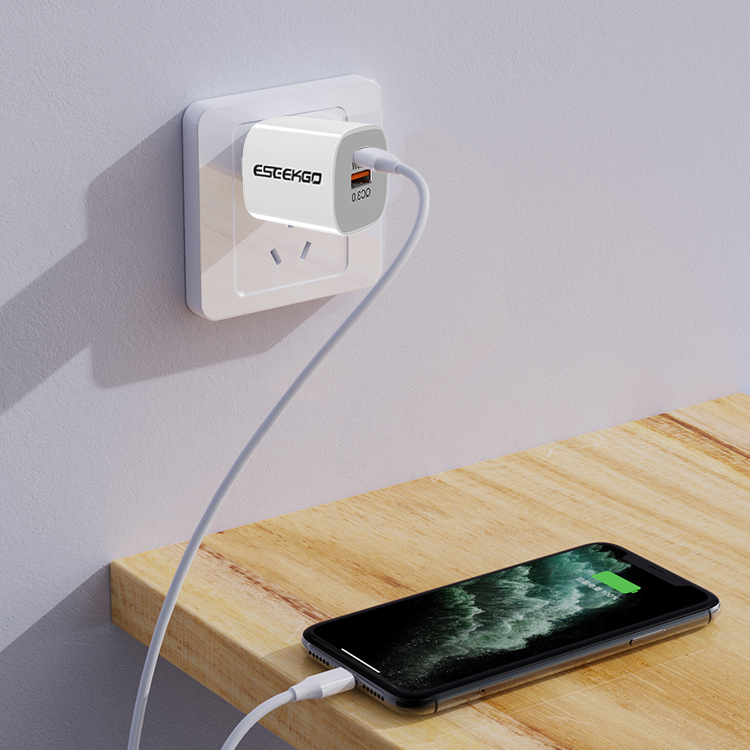 Efficiency: Support USB and Type-C output at the same time, no queuing and saving time.High quality output: PD 20W + QC3.0 18W high power output, triple speed and full charge.Portable: Simple and elegant design, easy to carry without taking up space, portable and perfect for travel. Compatibility: 100-240V wide voltage compatibility, can be used in different areas.Safety: Mutiple pretection safety rest assured.

