In today’s wireless age, Bluetooth audio solutions are everywhere, from headphones to car stereos. While Bluetooth offers undeniable convenience, it’s not always the superior option for audio quality and consistency. A high-quality AUX audio cable can make a big difference when it comes to sound fidelity, reduced latency, and reliable connections.
In this article, we’ll break down the differences between AUX and Bluetooth, explore why a quality AUX audio cable still matters, and highlight when it’s best to go wired over wireless.
To make the right choice, it’s essential to understand how AUX cables and Bluetooth work:
AUX (Auxiliary) Cable: An AUX cable is a physical audio connection that transmits analog sound from one device to another, usually via a 3.5mm jack. AUX cables provide a direct signal path from your audio source to your output, resulting in minimal interference or quality loss.
Bluetooth: Bluetooth, on the other hand, uses wireless technology to connect devices over short distances. It compresses audio files to send them wirelessly, resulting in some loss of audio quality. Bluetooth is popular for its ease of use, allowing users to connect without cables.
For audiophiles or anyone who prioritizes sound quality, AUX cables remain a top choice. Here’s why:
No Compression: AUX cables transmit audio in analog form, meaning there’s no compression of the audio signal. With Bluetooth, audio is usually compressed to save bandwidth, which can lead to a reduction in sound clarity and detail.
Better Frequency Range: A quality AUX cable can maintain the full frequency range of audio, capturing deep bass, mid-range tones, and high frequencies. Bluetooth can struggle to deliver this full range, particularly with lower-quality codecs.
Low Latency: Unlike Bluetooth, which can introduce a slight delay, AUX cables have virtually zero latency. This is essential for applications where timing is key, like gaming or watching videos, as even a small delay can disrupt the experience.
AUX cables provide a direct, wired connection that’s free from the limitations that can affect Bluetooth:
No Interference: Bluetooth signals can be affected by interference from other wireless devices, walls, and other physical barriers. An AUX cable, by contrast, offers a stable, uninterrupted connection with no risk of dropped audio.
No Battery Dependency: Bluetooth devices rely on battery power, meaning your headphones or speaker may die mid-use if they aren’t charged. With an AUX cable, you can keep listening without worrying about battery life.
Here are a few scenarios where an AUX cable generally outperforms Bluetooth:
High-Quality Music Listening: If you’re listening to high-resolution audio files or streaming from a high-quality source, AUX is preferable. It preserves more detail, depth, and clarity in the music.
Car Audio Systems: Many drivers still prefer using an AUX cable for connecting phones to their car stereo. It provides a stronger and more stable connection than Bluetooth, which can sometimes drop out or require pairing troubleshooting.
Gaming: Gamers benefit from the low latency of AUX cables, which helps sync audio precisely with the on-screen action. Bluetooth’s latency can lead to an audio delay that disrupts the gaming experience.
Studio and Professional Use: For those recording or producing audio, AUX cables deliver a cleaner and more reliable connection. Wireless can introduce too much variability, especially in professional settings where accuracy is paramount.
Despite its audio limitations, Bluetooth has its strengths:
Convenience: Bluetooth is a wireless solution, which makes it ideal for on-the-go use or quick setups. No cables mean more freedom to move around.
Compatibility: Most modern devices support Bluetooth, and it’s quick to pair. For casual listeners, the ease of Bluetooth often outweighs the need for premium sound.
Hands-Free Features: Bluetooth supports voice commands and hands-free controls, making it ideal for calls, smart devices, and situations where you want a hands-free setup.
If you’re looking to get the best out of a wired connection, the quality of the AUX cable you choose matters. Here’s what to look for:
Gold-Plated Connectors: These reduce oxidation and corrosion, ensuring a better connection and longer-lasting durability.
Shielding: Quality AUX cables are shielded to reduce interference and noise, which is crucial for clear audio.
Durability: Look for reinforced materials or braided designs for better durability, especially if you’re using the cable frequently or on the go.
Cable Thickness: Thicker cables are less likely to tangle and offer better insulation, though this might not be necessary for everyday casual use.
The audio industry is constantly evolving, with many devices now going wireless by default. However, AUX isn’t disappearing anytime soon, especially as there’s still strong demand for quality, reliability, and the full spectrum of audio that AUX cables offer.
Recent advancements in Bluetooth technology (like Bluetooth 5.2 and codecs such as aptX HD and LDAC) are narrowing the gap between wired and wireless audio, but wired options remain unbeatable in certain key areas, particularly for high-fidelity sound.
While Bluetooth’s convenience is hard to deny, a quality AUX audio cable is still the go-to choice for those seeking the best audio experience. With superior sound quality, reliable connections, and no latency, AUX cables offer clear advantages in many situations. By choosing a high-quality AUX cable, you ensure rich, uninterrupted audio whether you’re driving, gaming, or enjoying music at home.
AUX and Bluetooth both have their place, so consider your needs and how you’ll use your audio setup. Whether you’re a dedicated audiophile or a casual listener, both options can serve you well when used to their strengths.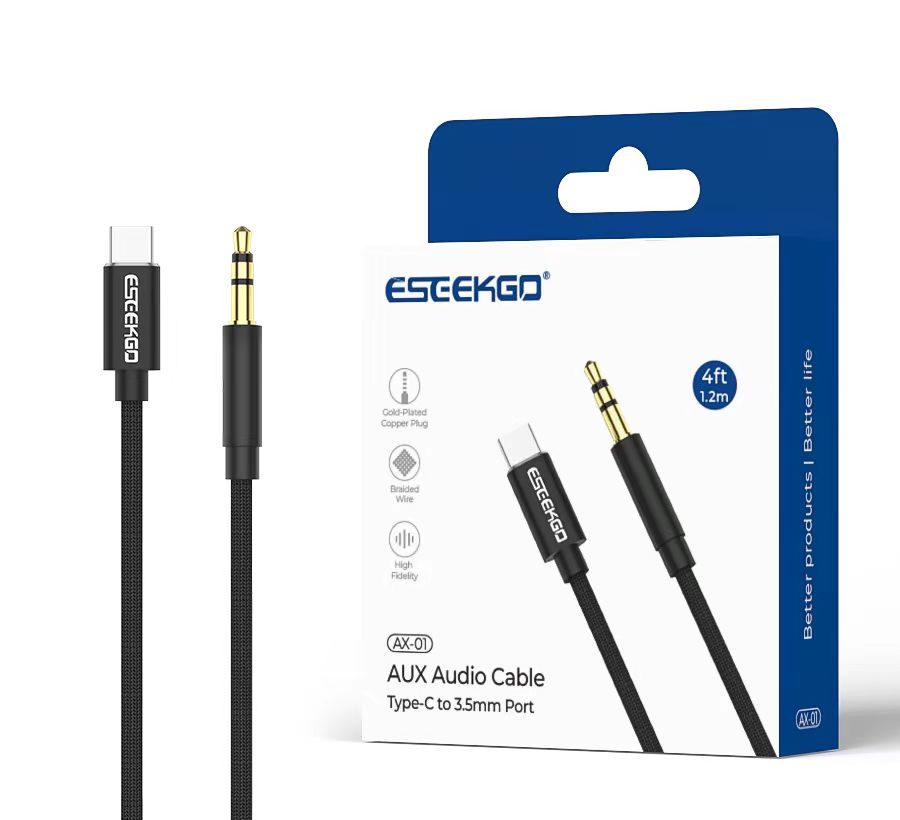
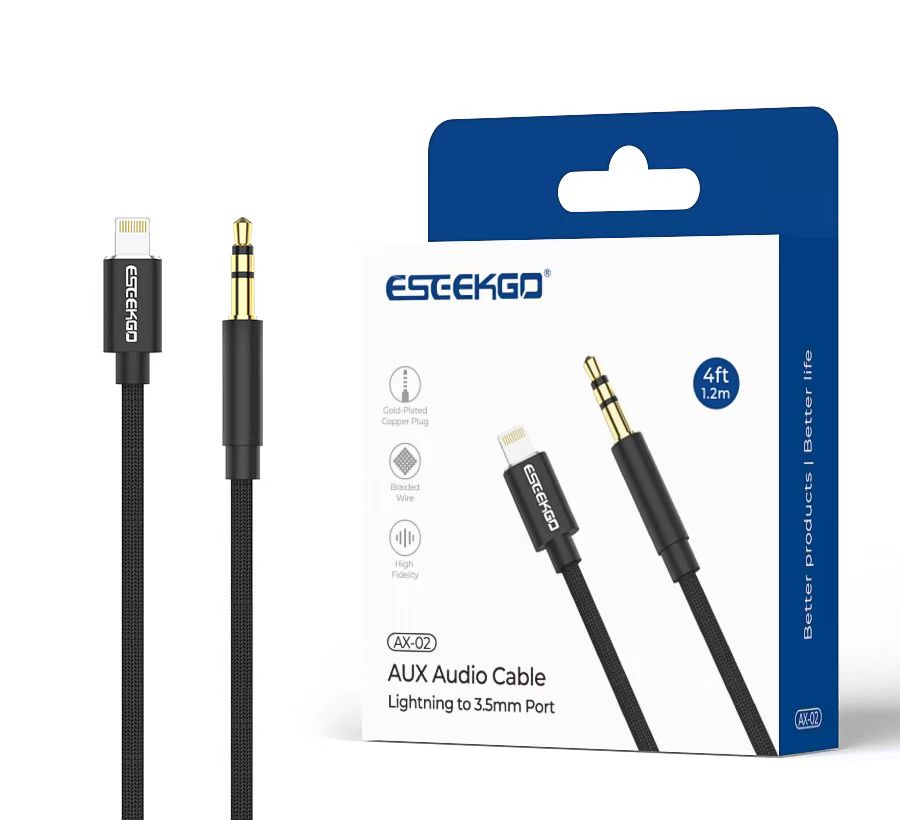
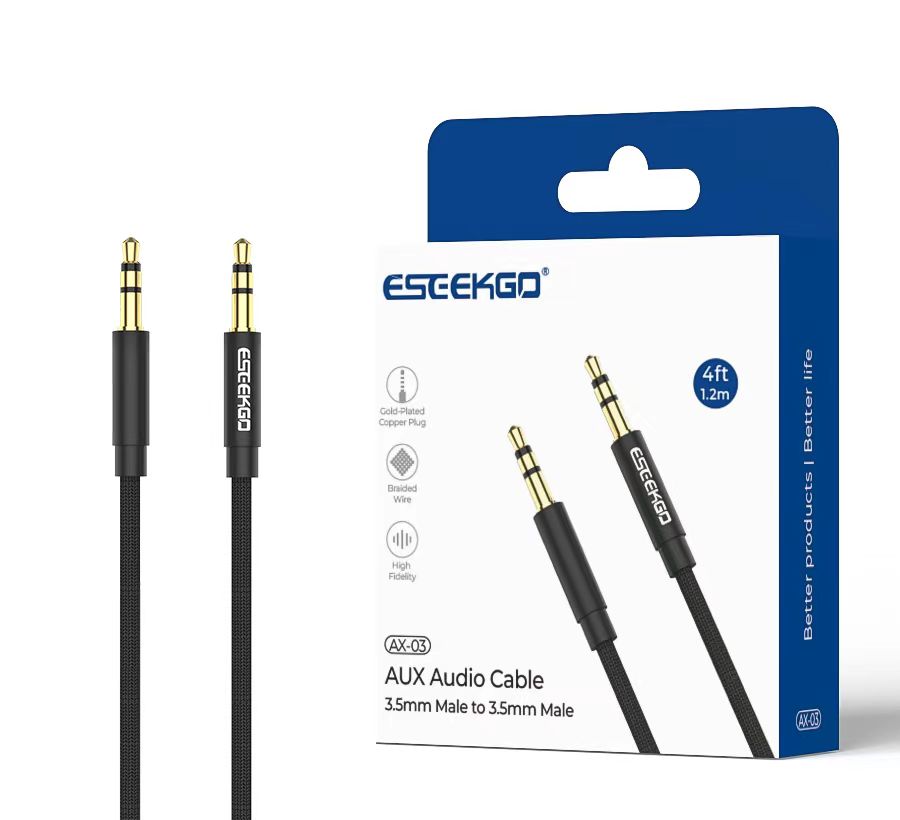
ESEEKGO AX-01/AX-02/AX-03 Nylon Braided 4FT Type-C/8 PIN/3.5mm To 3.5mm Audio Cable
Stable and high quality transmission: Built-in decoding chip, fast reading of device audio data, lossless transmission of sound quality.
Sound quality: Car music listening and navigation, plug and play,easily release music and experience HiFi sound quality.
Durability: 3.5mm anti-oxidation gold-plated plug, stylish and durable, effectively reducing sound quality loss during transmission.
Compatibility: Suitable for a variety of devices, can be connected to cars, audio and headphones, etc.

